The power of camp is built on culture. Here’s how to build one worth protecting.
What makes camp special? The answer isn’t the rope course or the lake or even the s’mores, as good as all of those are.
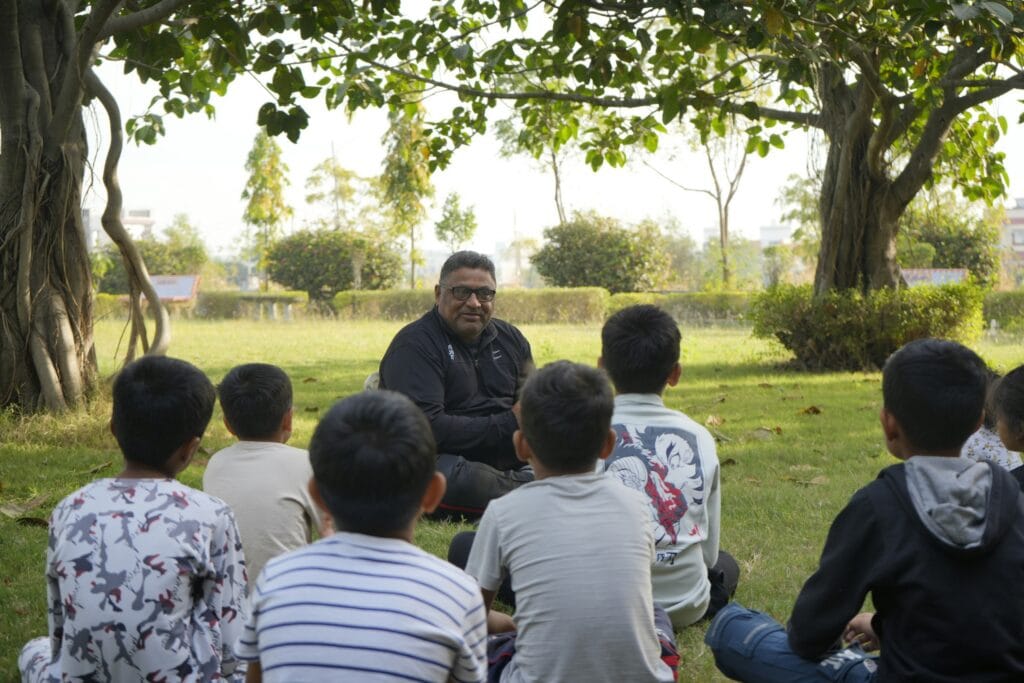
What makes camp special is that it is a place in a kid’s life where the adults around them are genuinely, unhurriedly, undistractedly present. They are tuned in to conversations and live fully in the moment with the campers. Camp is a place where relationships are given a chance to grow, face-to-face.
In today’s culture, places like this are becoming increasingly hard to find. Camp directors go to great lengths to make sure that this attention and culture are protected. This post takes a dive into the impact that a phone-less culture has on campers and ways to implement it among your staff.
The Impact of Camp on a Child’s Life
Why is camp good for kids?
There’s a growing body of research on what kids need to thrive, and camp checks almost every box. Time in nature. Face-to-face connection. Freedom from performance pressure. Novelty. Belonging. The experience of being part of something bigger than yourself.
The American Camp Association’s National Camp Impact Study, a landmark longitudinal study tracking data from 80 camps over five years, found that high-quality camp experiences produced measurable improvements in engagement, belonging, supportive youth-adult relationships, and experiential learning. 58% of youth reported that their time at summer camp helped them build key developmental skills, including independence and social awareness.
Source: American Camp Association, National Camp Impact Study (2023)
Those outcomes are the result of a purposefully crafted experience built on undivided adult attention. Something that, now more than ever, children crave.
What do kids experience at camp that they can’t get anywhere else?
The U.S. Surgeon General’s 2023 advisory on loneliness painted a picture of what childhood looks like. Young people ages 15 to 24 reported a 70% drop in time spent in person with friends over the past two decades. In 2020, Americans were spending just 20 minutes a day with friends face-to-face, down from 60 minutes daily in 2003. The number of teenagers who reported being online “almost constantly” has doubled since 2015.
Source: U.S. Surgeon General’s Advisory, Our Epidemic of Loneliness and Isolation (2023)
Camp is an environment that pushes directly against all of that. Camp asks kids to be present, and it places present adults in leadership and supporting roles. That important combination is increasingly countercultural.
If you have a conversation with a camp alumnus, their counselor and staff are likely top of mind. They’ll tell you about the counselor who encouraged them through homesickness, the feeling of belonging, and the personal growth they experienced. (Depending on age, speedboat might also be mentioned, but even then, be sure that the boat driver or lifeguard will be brought up) Those memories are the result of intentional adult presence, a rarity in a world of distractions.
Summer camp provides a screenless experience in a child’s summer. Camp is filled with opportunities to strengthen imagination, cooperation, and full physical engagement. When kids arrive, they’re often stepping out of months of passive screen consumption into a world that asks them to participate. The least you can do is make sure your staff is there to participate, too.
The Threat to What Makes Camp Special
Do kids notice when adults are on their phones?
Yes. A definite yes.
In a foundational study published in the journal Pediatrics, Dr. Jenny Radesky and her team at Boston Medical Center observed 55 caregivers eating with young children at fast food restaurants. 40 of the 55 used a mobile device during the meal. 16 were absorbed in their devices for the entirety of the meal, primarily engaged with the phone, not the child. Children who tried to regain attention were frequently met with irritation or were ignored altogether.
Dr. Radesky described the dynamic plainly: “Those moments of connection, those face-to-face interactions — kids’ brains are wired to learn from those.” When adults are on their phones, those moments don’t get a chance to happen.
And kids notice.
What is technoference, and how does it affect children?
Researchers have coined the term “technoference” to describe the way phone use interrupts real-world connections, and the downstream effects on children are well-documented. Studies have linked technoference to increased child anxiety, social withdrawal, acting out, and negative emotional affect. In laboratory settings, even brief parental phone use during free play caused infants to increase bids for attention and display signs of distress.
The pull of a phone is one of the most carefully engineered behavioral forces on the planet. Your staff aren’t weak for feeling it. Providing a framework helps them to resist it, though.
How does phone use affect camp culture?
Slowly, then all at once. One counselor on their phone during free swim is a minor thing. A cabin group where the default during downtime is everyone on their devices, staff included, is a culture. And culture, once established, takes time to change.
If camp is meant to be a screen-free zone for kids, what message is sent when adults aren’t held to the same standard? Kids notice when you’re on your phone, and they notice the double standard as well.
What Fully Present Counselors Look Like
What does good camp counselor engagement look like?
You know it when you see it, and so do campers. Here’s what it looks like in practice:
- Sitting at kid level during meals instead of standing at the edge of the table
- Making eye contact when a camper is talking, not scanning the room
- Initiating a conversation rather than waiting to be approached
- Remembering what a kid mentioned yesterday and bringing it up today
- Laughing at the punchline, not asking for a repeat.
None of those behaviors require special training, but they do require not being on a phone.
How does staff presence affect camper wellbeing?
Developmental psychology has a useful concept here: co-regulation. Research by Dr. Daniel Siegel, Clinical Professor of Psychiatry at UCLA and co-director of the Mindful Awareness Research Center, has shown that children regulate their own emotional states through connection with attuned adults. When a caregiver is calm, warm, and present, that nervous system state communicates itself to the child, helping them feel safer.
An emotionally available counselor gives kids a relational experience that many of them don’t get enough of outside of camp. Presence is a skill, and camp provides a place to practice that skill.
Being present at camp isn’t just good for the kids. It’s good for the staff too. Research on screen fatigue is well-established, and constant connectivity is cognitively and emotionally exhausting. A summer at camp, used as a break from the digital world, can be one of the most rejuvenating professional experiences a young person has.
How to Build a Phone-Free Camp Culture
How do you talk to camp staff about phone use?
The difference between a policy and a culture is whether people understand the reasoning behind it. A rule without a reason gets followed only when it’s being policed. A value, something people understand and believe in, gets lived out.
So, before you hand out the staff handbook, have a conversation. Here’s how to frame it.
Lead With Why
Start with what makes camp special, not with the restriction. Share the research. Talk about what kids are experiencing before they arrive at camp and what you want them to feel while they’re there. Make your staff feel like the Rebel Alliance guarding against the Dark Side.
Some language you can use for that conversation:
- “We’re asking you to be the most present adult in a kid’s life this summer. For a lot of these campers, it might be the most seen they feel all year.”
- “Camp feels different because we make it different. The moment it starts feeling like the rest of the world, we’ve lost the full impact we could have.”
- “We’re not asking you to give up your phone. We’re asking you to be intentional about when you use it, because when you’re on it, you’re somewhere else. And these kids need you here.”
We know some of your camp tools live on a phone. Scheduling, communication, and even platforms like UltraCamp that help your admin staff keep everything running exist on devices. The goal is intentional, minimal phone use, not disconnection and disorder.
Normalize the Brain Break
A reframe you can offer your staff is that being off your phone at camp is a relief. Many of your counselors have never experienced a sustained stretch of life without their devices, and are mentally exhausted as a result.
Frame phone-free time as something they’re getting, not something they’re giving up. You’re handing them permission to be unreachable. To be bored. It’s countercultural, and for many young people, it’s novel and freeing.
The Practical Side of Phonelessness
Culture framing gets people on board, and structure keeps it going. Here are a few approaches that work:
- Designated phone times for staff. Free periods and off-hours are fair game; active programming and cabin time are not
- A physical home base for phones during programming. A pocket or pouch, a charging station in the staff area, so the default is off-person rather than in-hand.
- Visible modeling from leadership. When directors are visibly present and unhurried, it permits staff to do the same
- Peer accountability over top-down enforcement. Counselors looking out for each other creates buy-in that rules don’t.
- A low-stakes check-in mid-session. A conversation about how the culture is feeling.
How do you handle pushback from staff?
Some staff will push back, and the most common version sounds like: “How do we communicate? What about a camp emergency?”
Hello to the radio! Hello Intercoms! There are creative solutions to every difficulty. If there is a personal emergency, staff should, if possible, ask someone else to supervise and step out of the campers’ sight and hearing.
Protect What Makes Camp Special
So, what makes camp special?
It’s the adults who choose, in a world built on distraction, to be completely present and available. The staff members who make time for uninterrupted relationship building create the most transformational camp experiences for their campers.
The culture that makes that possible is yours to build. It starts with a conversation with your staff about why this matters, the structures you put in place, and how you will keep yourself accountable.
If you want your staff to spend less time on their phones for administrative reasons, UltraCamp helps consolidate the logistics, scheduling, communication, and camper records, so the work that has to happen on a device happens efficiently, and the rest of the summer can happen off of one. Book a free demo and see how it works.